• Need a Pingdom underline
    alternative?

    Try Pulsetic. Same features, same peace of mind - for a much lower price.

    Learn why...

    No credit
    card required.

  • Looking for Pingdom alternative?

Pulsetic vs Pingdom: the breakdown

Your website is your shop front. And you’d never leave your shutters down all day, right? That’s why you need to be the first to know if something goes wrong - the moment it happens.

Pulsetic does that for you. It monitors your uptime from 15 locations around the world, giving you and your customers beautiful, real-time updates in every language.

But there’s another reason people looking for a Pingdom alternative come to Pulsetic: the price.

Let’s compare the two.

  • Beautiful status badges

    Beautiful status badges

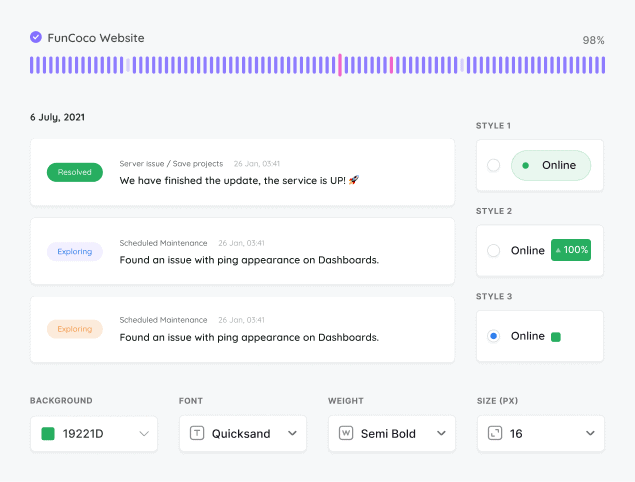
    Unlike Pingdom, Pulsetic gives you a white labeled badge showing your service availability in real time - on any page you like. You can customize it to your brand in minutes: colors, fonts, symbols, text, and backgrounds. And if you need more freedom to make it yours, you can use Custom CSS instead.

  • Beautiful status badges

    30 second uptime checks 

    With paid plans, Pingdom and Pulsetic both check things are OK every 30 seconds. If you want to, though, you can also space out the intervals between checks with Pulsetic. And if you’re constrained by budgets, Pulsetic will run checks every five minutes - completely free.

  • Support for every language 

    Support for every language

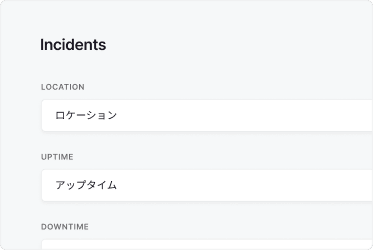
    Pingdom’s public status pages are in English - and only English. The world’s 6 billion people who don’t speak English need a Pingdom alternative. Pulsetic, on the other hand, supports every language on earth: from Spanish to Swahili. So wherever your customers are, you can let them know what’s happening.

  • "There's an easy way for you to monitor your online project. After all the hard work you have put into going live, you want to make sure that things keep running smoothly while you focus on the next project."

  • Review person

    Chris Kalmar

    Senior Software Architect & Founder at nineLemon

Pricing: Pulsetic vs Pingdom

  • Free plans

    Pingdom doesn’t come with a free plan. Pulsetic, on the other hand, gives you lots of functionality for free: alerts, integrations, SSL monitoring and unlimited, full-featured status pages, as well as custom domains.

  • Paid plans

    On the cheapest paid plan, Pulsetic’s alternative to Pingdom gives you complete customization for your status page and badges, as well as notifications for up to 1,000 subscribers.

    Pingdom is priced in a different way; how much you pay depends on how many alerts you need. To monitor 10 websites, with up to 50 SMS alerts, you’ll pay $33 per month.

    For 200 monitors, with 400 SMS alerts, you’ll pay $195 per month. Pulsetic’s Organization plan also includes 300 monitors, at less than a quarter of the price: just $49.

    And if you’re an enterprise client, 1000 monitors on Pingdom costs $880 per month; Pulsetic’s alternative to Pingdom, meanwhile, offers 1000 monitors for only $189 per month.

    All of Pingdom’s plans come with transaction, page speed and uptime monitoring, email & SMS alerts and unlimited users.

Feature comparison

PulseticPulsetic

Pingdom

Free plan / trial

Free Plan

30 days

Price (USD/mo)

$9

$16

Monitoring

Check time

30 sec

60 sec

Choice of regional data centers

SSL monitoring

Keyword monitoring

Ping / ICMP monitoring

Port monitoring

TCP monitoring

Domain monitoring

Cron / heartbeat monitoring

Custom HTTP requests

Customized responses

API

MCP server

n8n integration

Monitoring data retention

Up to 5 yr

13 mo

Status Pages

Incident updates

Status updates for subscribers via email

Maintenance windows

Status badges

Customized domain

Customized colors

Customized logo

Remove branding

Customized status page layout

CSS customization

Custom email sender & templates

AI writing assistant

Page translations

Password-protected status page

Notifications

Email alerts

SMS alerts

Phone call alerts

Slack alerts

MS teams alerts

Discord alerts

Telegram alerts

Mattermost alerts

Webhooks alerts

Zapier alerts

Twilio alerts

Datadog integration

Integration with SIGNL4

Analytics

See response times

Response time by location

Custom date range reports

Scheduled email reports

Security

Two-factor authentication

Single Sign-On (SAML)

Role-based access

Support

Chat

Human Support

AI Support

Helpdesk Articles

Email Support

Comparison based on publicly available information as of June 2026. Features and pricing change frequently, so please verify current details on each provider’s website.

And there’s more in Pulsetic’s free plan…

  • Find why your website is slow

    See where your website is loading slowly

    We’ll check your website response times from different locations around the world, so you know if there’s an issue in a particular region.

  • Find why your website is slow

    Alerts wherever you want them

    Pulsetic lets you know the moment your website is down, through Slack, Telegram groups, Webhooks, email, SMS or voice call.

  • Find why your website is slow

    Never let your SSL expire again

    We’ll let you know when it’s time to update your SSL certificate - so you can renew it before customers are seeing error messages.

Frequently asked questions

  • Is Pingdom free?

    No. Pingdom does not have a permanently free plan, only a time-limited trial, so you have to move to a paid subscription once it ends. Pulsetic, by contrast, offers a genuinely free plan that includes monitoring, alerts, SSL checks, and full status pages. It is a practical way to keep watching your websites without a recurring bill.

  • Is there a free alternative to Pingdom?

    Yes. Pulsetic is a free alternative to Pingdom that covers the essentials most teams need: uptime and SSL monitoring, alerting, and unlimited status pages with a custom domain. Paid plans start at just $9 per month if you later need shorter check intervals, more monitors, or extra integrations. You get to start for free and scale only when your needs grow.

  • Why is Pingdom so expensive?

    Pingdom is widely seen as pricey because paid plans start around $16 per month and climb quickly as you add monitors, faster checks, and SMS alerts. Since the SolarWinds acquisition, pricing rose and the old free tier was removed, which pushed many smaller teams to look elsewhere. Pulsetic delivers comparable uptime monitoring and status pages from $9 per month, with a free plan to start.

  • How does Pulsetic compare to Pingdom on price?

    Pulsetic is consistently cheaper across the board. Paid plans begin at $9 per month versus roughly $16 and up for Pingdom, and Pulsetic also has a free plan that Pingdom does not offer. For growing teams the gap widens further, since Pulsetic packs more monitors and full status pages into its plans without the per-check costs that make Pingdom add up.

  • Is Pulsetic a good alternative to Pingdom?

    Yes. Pulsetic covers the core of what people use Pingdom for, including uptime monitoring, SSL and response-time tracking, alerting, and public status pages, at a lower price and with a free tier. It also runs checks as often as every 30 seconds, compared with 60-second checks on Pingdom, so you can catch outages sooner. For most websites, SaaS products, and agencies it is a strong, budget-friendly replacement.

  • What types of monitoring and checks does Pulsetic support?

    Pulsetic monitors HTTP and HTTPS endpoints, SSL certificates, keywords on a page, ping or ICMP, ports, TCP services, domains, and cron or heartbeat jobs. Checks can run as frequently as every 30 seconds, and you can alert through email, SMS, phone calls, Slack, Discord, Telegram, Microsoft Teams, webhooks, and more. This gives you broad coverage from a single tool without stitching together add-ons.

  • Can I move my status pages from Pingdom to Pulsetic?

    Yes. Pulsetic includes full status pages on every plan, including the free one, with custom domains, status badges, and subscriber notifications so visitors are kept informed during incidents. Switching is straightforward: recreate your monitors, point a status page at them, and connect your alert channels. Because the free plan is fully featured, you can set everything up and run it alongside Pingdom before you cancel.

  • Does Pulsetic include SMS and phone call alerts?

    Yes. Pulsetic can notify you by email, SMS, and phone call, as well as through Slack, Microsoft Teams, Discord, Telegram, and webhooks, so the right people hear about downtime quickly. With Pingdom, SMS alerts are usually billed as paid credits on top of your plan, which adds to the cost. Having these channels built in keeps your alerting simple and predictable.

Hey there 👋  Friends from designmodo are here to help!