-
Need an IsDown
alternative?Try Pulsetic. Incident emails for 4,400+ services you rely on, with uptime monitoring and status pages in the same account, and a free plan to start.
No credit
card required.
Try Pulsetic. Incident emails for 4,400+ services you rely on, with uptime monitoring and status pages in the same account, and a free plan to start.
Credit where due: IsDown is built for exactly this job. It follows 6,320+ services, filters each one by component and severity, and flags outages from user reports before the vendor posts anything. Since June 2026 it has been part of UptimeRobot.
The catch is the way in. There is no free plan, team plans start at $49 a month for 30 monitors, and webhooks, SMS and PagerDuty wait for the $99 Premium plan. The $27 Starter plan for individuals alerts to Slack and email only. Uptime checks for your own website come out of the same monitor limit and run from 3 locations.
That’s why people searching for an IsDown alternative land on Pulsetic: incident emails for 4,400+ services, next to full uptime monitoring and status pages, with a free plan, paid plans from $9 and $0.20 for each extra dependency.
Let’s compare the two.
Start free, stay cheap
IsDown has no free plan and starts at $27 a month for 15 monitors. Pulsetic’s free plan includes a dependency monitor, and 15 dependencies cost $11.40 a month on the Solo plan.
Uptime monitoring, not an extra
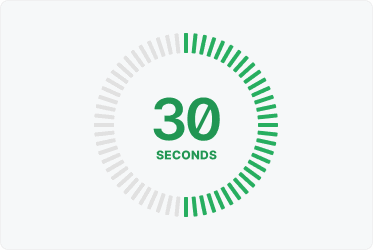
IsDown checks your website from 3 locations, every 3 minutes on Pro and Premium. Pulsetic checks as often as every 30 seconds from up to 15 regions, and uptime monitors do not use up your dependency allowance.
Status pages from the free plan
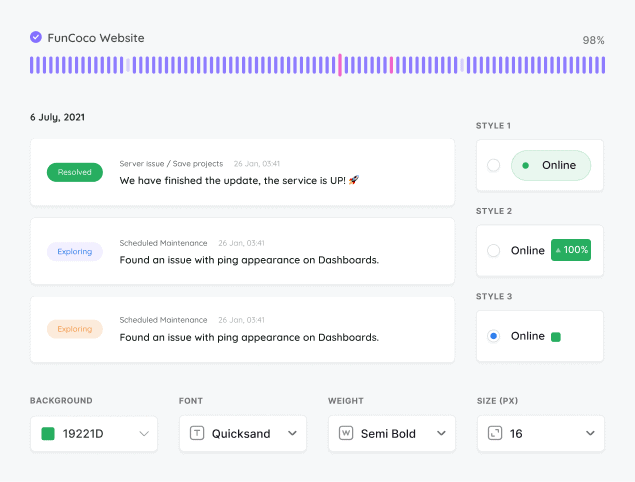
Every Pulsetic plan, Free included, can show dependencies on a status page on your own domain. Removing Pulsetic branding starts at $19 a month, where IsDown asks $99.
“Pulsetic has simplified our uptime monitoring significantly. We’ve fully automated uptime tracking and SLA reporting, which removed a lot of manual work from our monthly and annual reports. The API is especially valuable for us, as it allows us to use a dedicated health-check endpoint and integrate uptime data directly into our internal workflows.”
Mariana Kodama
Treasurer, Fundacion Jorge Luis Borges
Free plans
IsDown has no free plan, only a 14-day trial. Pulsetic’s free plan includes 1 dependency monitor, 10 uptime monitors and 3 status pages on your own domain, with commercial use allowed.
Paid plans
IsDown’s team plans cost $49, $99 and $179 a month for 30, 70 and 150 monitors, uptime checks included, and Starter for individuals is $27 for 15. Pulsetic’s alternative to IsDown is $9, $19 and $49 with 3, 10 and 30 dependency monitors, with uptime monitors counted separately.
Alert channels
IsDown sends to Slack on every plan and adds Microsoft Teams, SMS, webhooks and PagerDuty on higher tiers. Pulsetic sends dependency alerts by email, while its uptime monitors use Slack, SMS and phone calls on paid plans.
IsDown
Free plan / trial
Free plan (1 dependency monitor)
No free plan; 14-day trial
Entry price (USD/mo)
$9 (3 dependency monitors)
$27 (15 monitors, Starter for individuals)
Price for 25 dependencies (USD/mo)
$13.40 (Solo plus 22 at $0.20)
$49 (Pro)
Dependency Monitoring
Services you can monitor
4,400+
6,320+
Alerts filtered by severity
Alerts filtered by component or region
✕
Pro and up
Maintenance alerts
Early warnings from user reports
✕
Incident history
90 days
Up to 24 months by plan
Dependency Alerts
Slack
✕
Microsoft Teams, Google Chat, Discord
✕
Pro and up
Webhooks
✕
Premium and up
SMS
✕
Premium and up
PagerDuty and Opsgenie
✕
Premium and up
Monitoring Your Own Website
Uptime monitoring
Fastest check interval
30 sec
1 min (Business)
Check locations
Up to 15
3
Keyword monitoring
Status Pages
Dependencies on your status page
Custom domain
Every plan
Every plan
Email updates for subscribers
Solo and up
Every plan
Password-protected status page
Solo and up
Premium and up
Remove branding
Team ($19) and up
Premium ($99) and up
SSO-protected status page
Organization ($49)
Business ($179)
Account
Two-factor authentication
API and MCP server
Team and up
Business and up
Comparison based on publicly available information as of September 2026. Features and pricing change frequently, so please verify current details on each provider’s website.
Trusted by teams at companies around the world
Know when it’s them, not you
One dependency monitor emails you when a provider you rely on opens, updates or resolves an incident, so you stop guessing during an outage.
See where your website is loading slowly
We’ll check your website’s response times from different locations around the world, so you know if there’s an issue in a particular region.
Never let your SSL expire again
We’ll let you know when it’s time to update your SSL certificate, so you can renew it before customers see error messages.
2-minute setup · Cancel any time
No credit card needed
Focus. IsDown does one job: it follows 6,320+ services, lets you filter each one by component and severity, and flags outages from user reports before the vendor posts about them. Alerts go to Slack on every plan, with Microsoft Teams, SMS, webhooks and PagerDuty on higher tiers. Pulsetic covers fewer services and alerts by email, but has a free plan, costs less and adds full uptime monitoring and status pages.
The team plans are Pro at $49 a month for 30 monitors, Premium $99 for 70 and Business $179 for 150, or about 20% less billed annually. Starter, the plan for individuals, is $27 for 15 monitors with one admin user and alerts to Slack and email only. There is a 14-day trial and no free plan. Pulsetic includes 1 dependency monitor on Free, 3 on Solo ($9), 10 on Team ($19) and 30 on Organization ($49), and extra ones cost $0.20 each on any paid plan.
No. After the 14-day trial you pick a paid plan, and IsDown's monitor limit covers your own uptime checks as well as the services you follow. Pulsetic's free plan includes 1 dependency monitor, 10 uptime monitors and 3 status pages on your own domain, and commercial use is allowed.
IsDown lists 6,320+ services. Pulsetic covers 4,400+, and the full list is public in the Pulsetic status directory at pulsetic.com/status, so you can check that every provider you rely on is there before you switch.
Not today. Pulsetic sends dependency alerts by email when a provider opens, updates or resolves an incident. For each dependency you can choose all incidents, including maintenance, or only major and critical ones, and send the alerts to any email address, such as a shared team inbox. The uptime monitors for your own website alert through Slack, Microsoft Teams, Discord, SMS and phone calls on paid plans.
No. Pulsetic alerts you when the provider opens, updates or resolves an incident on its status page. IsDown's early outage detection uses crowdsourced user reports to flag problems before the vendor posts, so if early detection matters most to you, IsDown is stronger here.
UptimeRobot. IsDown was founded in 2020 and joined UptimeRobot on 1 June 2026. IsDown says it keeps its own brand, plans and prices.
Not for every team. Stay with IsDown if you need component filters, alerts routed to Slack, SMS or PagerDuty, early warnings from user reports, or services outside Pulsetic's 4,400+. Pulsetic suits teams that want an email when the providers they rely on have incidents, next to proper uptime monitoring and status pages, with a free plan to start.
Stay online, all the time, with Pulsetic's uptime prime.
By Designmodo
Designmodo Inc. 169 Madison Ave, #79627, New York, NY 10016, United States
Copyright © 2010-2026. Pulsetic® is a registered trademark.